

Notpla: The East London Materials Company Making Packaging Out of Seaweed
A student experiment became a Hackney Wick company whose bubbles, coatings and paper are moving from public trials into institutional use.

Editorial note: this independent profile is based on the public sources listed below. It is not an endorsement, paid placement or reported interview.
The small object that made a large idea visible
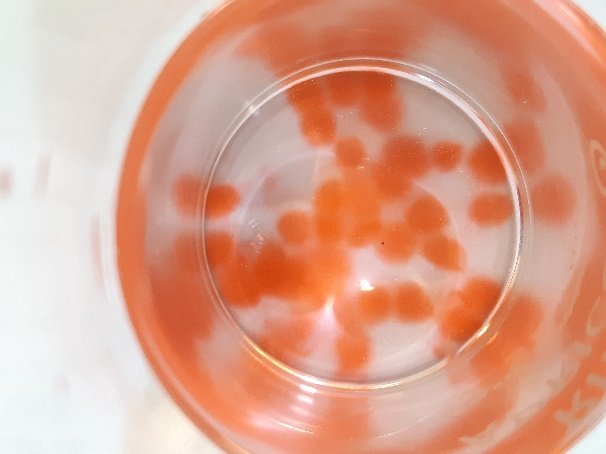
Ooho is memorable because it makes an alternative to plastic feel immediate: liquid held inside a translucent, edible membrane. The first version was developed by Pierre Paslier and Rodrigo García González while they were studying Innovation Design Engineering, the joint Royal College of Art and Imperial College London programme.
The experiment became Notpla, now based at Queen’s Yard in East London. Its name compresses the mission into two words: not plastic. Yet the company’s work has expanded far beyond the original bubble.
A family of materials
Notpla describes a portfolio made from seaweed and plants: coatings for food containers, paper, dissolving films and pods, as well as continuing prototype work. This matters because replacing plastic is not one design problem. A takeaway box, a liquid portion and a sheet of paper each ask different things of a material.
The London Marathon gave Ooho a public-scale test in 2019, when more than 36,000 capsules were used. The moment was visually striking, but it also signalled the operational question behind the image: could a new material perform inside a live system?
From recognition to rollout
Notpla won the 2022 Earthshot Prize in the “Build a Waste-Free World” category, receiving £1 million. In 2024 the company announced a further £20 million investment round for international expansion and materials development.
The story returned to its academic starting point in 2026, when Imperial College London announced a rollout of Notpla packaging across campus catering. Imperial projected that the switch would replace more than 450,000 single-use items. That figure is the university’s forecast, but it shows the scale at which the material is now being considered.
Why London matters to the story
Notpla sits at an intersection London is unusually good at producing: design education, scientific research, climate ambition, hospitality and access to large public events. Its East London address is not just a line in a registry; it places the company inside a network where experiments can meet institutions and audiences.
The most credible reading is neither miracle material nor novelty object. It is a London company doing the slow work of turning an arresting idea into a range of usable systems.